

Trustindex verifies that the original source of the review is Google. Awesome staff
Owner's reply
Thank you, C! We're so glad you had a great experience with our team. We truly appreciate your kind words!Posted on GoogleTrustindex verifies that the original source of the review is Google. I enjoyed my experience with MAK Auto Repair. The price for the alignment was fair, and revealed some possible issues for me to address. Chris was professional, personable and knowledgeable regarding my service and my desire to understand the diagnosis of my vehicle. I recommend this business to others.
Owner's reply
Thank you, Lflo, for sharing your experience! We're thrilled to hear Chris provided you with professional and clear service. Your recommendation means a lot to us, and we’re glad we could help identify potential issues for you. Let us know if there’s anything else we can assist you with in the future!Posted on GoogleTrustindex verifies that the original source of the review is Google. Best in town! Chris is an amazing guy — super professional, friendly, and helpful.
Owner's reply
Thank you, Luiz! We’re thrilled to hear you had such a great experience with Chris. Your kind words mean a lot to us, and we’ll make sure to share them with him. We look forward to serving you again!Posted on GoogleTrustindex verifies that the original source of the review is Google. Extremely efficient, quickly repair , committed, and detail-oriented professionals were there helping me constantly with everything I needed. I am very happy, and I will definitely return there when I need again
Owner's reply
Thank you, Leticia! We're thrilled to hear about your great experience. Providing efficient and attentive service is what we strive for, and it’s wonderful to know we met your expectations. We look forward to helping you again whenever you need!Posted on GoogleTrustindex verifies that the original source of the review is Google. Clear communication, no hassle and very friendly service. Would definitely go back. Thank you guys!!
Owner's reply
Thank you so much for your kind words! We're thrilled to hear you had such a positive experience. Your support means a lot to us, and we look forward to welcoming you back anytime!Posted on GoogleTrustindex verifies that the original source of the review is Google. Visiting this location was a smooth and welcoming experience. Great and friendly staff!
Owner's reply
Thank you, Eimantė! We’re thrilled to hear you had such a smooth and welcoming experience. Our team works hard to make every visit enjoyable, and your kind words mean a lot. We hope to see you again soon!Verified by TrustindexTrustindex verified badge is the Universal Symbol of Trust. Only the greatest companies can get the verified badge who has a review score above 4.5, based on customer reviews over the past 12 months. Read more
AUTO DIAGNOSTICS Casselberry, FL 32701
Check Engine Light On? We Find the Problem Fast — No Guesswork.
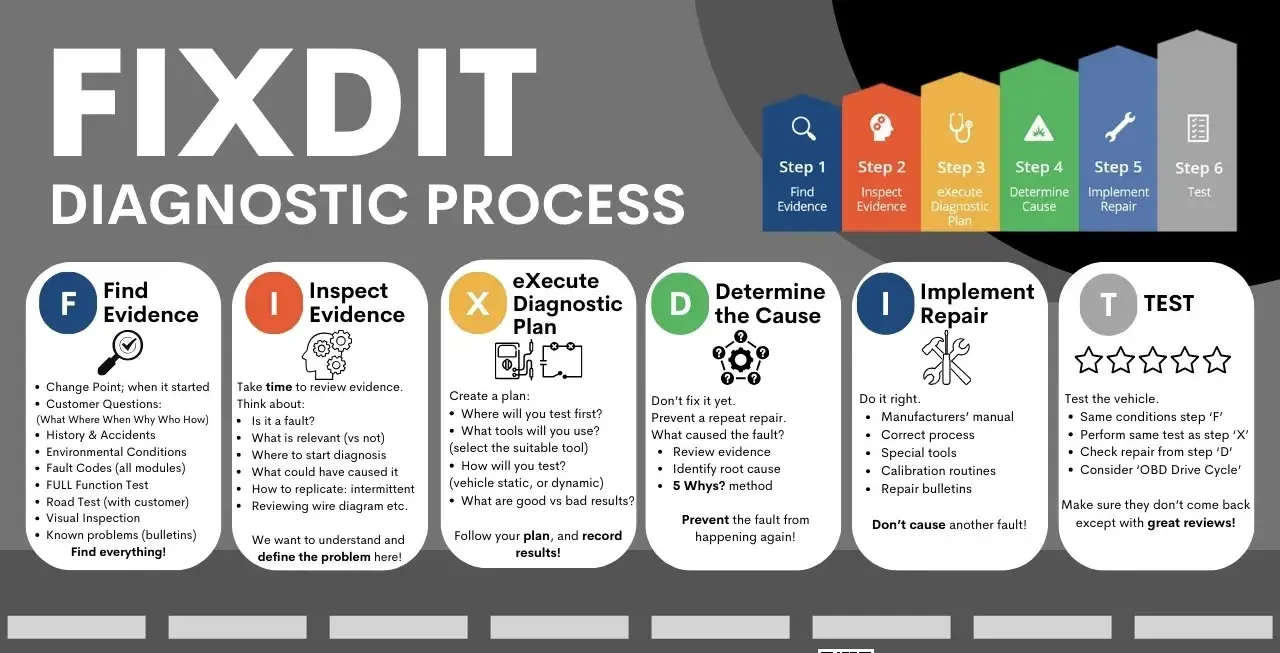
At MAK Auto Repair, we specialize in advanced vehicle diagnostics that go far beyond a basic check-engine light scan or a quick, generic code readout from a handheld tool. Modern vehicles are essentially rolling networks of computers, sensors, modules, and electronic controls that all communicate with each other constantly. Because of that, a stored trouble code is rarely a complete answer on its own. More often, it’s simply the first breadcrumb in a longer trail—a clue that points us toward a system or condition that needs attention, not a final verdict that tells you exactly which part to replace. That’s why our diagnostic process is built around professional-grade scan tools, detailed live-data analysis, factory-level service information when available, and thorough hands-on testing to uncover what’s actually happening inside your vehicle’s most critical systems.
Our experienced technicians take a careful, methodical approach to tracking down the true root cause behind performance issues and drivability complaints. We don’t rush to conclusions, and we don’t rely on guesswork. Whether you’re dealing with warning lights, rough running, hesitation, stalling, poor fuel economy, loss of power, hard starts, misfires, unusual shifting behavior, or an intermittent problem that seems to come and go without warning, we focus on finding the real failure—not just the most common or most convenient explanation. That distinction matters, because codes can be triggered by multiple conditions, and the component listed in a code description is not always the component that’s actually bad. In many cases, the code is a symptom of another underlying issue, such as a wiring concern, a vacuum leak, low fuel pressure, a failing sensor signal, or a communication problem between modules. Instead of stopping at “what the code says,” we follow the evidence until we can support the diagnosis with testing and data.
A big part of that process is evaluating sensor readings in real time. We use live data streams to see how the vehicle is responding in the moment under real operating conditions. We compare values to known-good specifications, verify baseline readings, and determine whether the data makes sense for the situation the vehicle is in. For example, we look at how fuel trims react, how oxygen sensors and air-fuel sensors respond, whether airflow and load values are reasonable, and whether temperature and pressure readings match what the engine and environment are actually doing. We also review freeze-frame data, which captures a snapshot of conditions at the moment the fault was detected, and we analyze patterns over time to identify trends that point to the root cause. By looking for correlations—what changed first, what followed, and what systems were affected—we can narrow the problem down to what’s truly responsible.
From there, we back up the scan data with practical, hands-on testing. Diagnostics isn’t just reading numbers; it’s verifying what those numbers mean in the real world. That includes performing circuit checks, confirming proper power and ground, inspecting connectors and wiring for damage or corrosion, testing components under load, and making sure signals are clean, stable, and within expected ranges. In some cases, the issue isn’t the part itself but the conditions around it—such as a poor connection, a damaged wire inside a harness, a failing relay, a weak ground, or a voltage drop that only shows up when the system is working hard. We also verify that the system behaves correctly after repairs are made, because a proper diagnosis isn’t complete until the fix is proven and the issue is resolved.
When needed, we replicate the problem under the same conditions you experience. Many faults won’t show themselves in a quick idle test in the parking lot. Some only appear during cold starts, highway speeds, stop-and-go traffic, heavy acceleration, long uphill grades, extended idling, or heat-soak scenarios after the engine has warmed up and components expand. If your issue is intermittent, we treat it seriously and approach it strategically. We’ll look for stored history codes, monitor data during a road test, and use targeted testing methods to capture the fault when it happens. Our goal is to reproduce the symptoms, confirm the failure, and identify the exact trigger so the repair is both accurate and lasting.
Instead of guessing or replacing parts unnecessarily, we take the time to verify symptoms, confirm test results, and validate the failure before recommending any repairs. This is one of the biggest ways we protect our customers from expensive frustration. “Parts swapping” can get costly quickly—especially on modern vehicles where components may require programming, calibration, or significant labor to access. Replacing the wrong part might temporarily change the symptom while the real issue continues to develop, only to return days or weeks later. Our diagnostic approach helps prevent repeat visits, reduces wasted time and money, and ensures the repair plan is based on proof—not assumptions. When we recommend a fix, it’s because we’ve tested and confirmed the cause, and we can explain the logic behind the solution in a way that’s straightforward and easy to understand.
We also recognize that diagnostics shouldn’t feel like a mystery. You deserve clear communication and a plan you can trust, especially when the problem is complicated or doesn’t have an obvious answer. That’s why we focus on explaining what we found, how we tested, and what the results mean for your vehicle. You’ll get transparent next steps and honest guidance on what’s urgent versus what can wait, based on safety, reliability, and your goals for the vehicle. We’ll walk you through what’s happening, why it’s happening, and the best options to restore performance and dependability—whether the solution is a simple repair, a deeper electrical issue, a sensor or actuator failure, a network communication concern, a fuel or ignition system problem, or a step-by-step troubleshooting process needed to pinpoint an elusive fault.
If there are multiple possible causes, we’ll explain how we narrowed them down and what testing confirms our conclusion. Sometimes a symptom can point to several different systems, and it takes structured testing to eliminate possibilities one by one. We’ll share that process with you so you understand why we’re recommending a particular repair path. And if we discover related issues along the way—like a failing battery causing low-voltage module errors, or a charging problem creating erratic sensor readings—we’ll let you know what’s connected and what’s separate, so you can make informed decisions without pressure.
Because today’s vehicles rely so heavily on integrated electronics, module communication, and precise control strategies, having the right tools and training matters. Our diagnostic capability includes the ability to read enhanced vehicle data, view module-specific information, and use professional equipment designed for modern drivability and electrical challenges. When factory-level information is available, we reference it to follow proper diagnostic flow charts, access accurate wiring diagrams, and confirm correct specifications. This helps us avoid shortcuts that lead to wrong conclusions, and it allows us to diagnose issues that a basic scan tool simply can’t identify—especially when multiple systems are interacting or when the fault involves communication networks and module data.
Ultimately, our goal is simple and consistent every time: diagnose accurately, repair with confidence, and fix it right the first time. When you bring your vehicle to MAK Auto Repair, you’re not just getting a code read or a quick recommendation—you’re getting a thorough, professional diagnostic process built to uncover the true cause of the problem and deliver the right repair the first time. The result is fewer surprises, clearer answers, and a vehicle you can count on for the road ahead
⚠️ CAUSE & CONCERN
Many common vehicle problems can usually be traced back to a handful of root causes, including:
- Faulty sensors (O2, MAF, crankshaft) that send inaccurate readings
- Electrical issues, poor connections, or wiring faults that disrupt signals
- Engine misfires caused by worn spark plugs or failing ignition coils
- Fuel delivery problems such as weak pumps, clogged filters, or bad injectors
- Emissions system failures that reduce efficiency and trigger warning lights
Skipping proper diagnostics can turn a small issue into serious damage and much higher repair costs over time.
🚨 COMMON SYMPTOMS
If you’re noticing any of the issues below, your vehicle may be signaling an underlying engine or fuel-system problem that needs attention:
- Check engine light
- Rough idle or shaking
- Loss of power or sluggish acceleration
- Poor fuel economy or reduced mileage
- Hard starting, stalling, or inconsistent running
🔧 CORRECTION PROCESS
- Run a comprehensive, full-system scan to check for errors, conflicts, and performance issues.
- Perform live data analysis to spot real-time anomalies and pinpoint where problems begin.
- Conduct targeted component testing to verify each part is functioning correctly.
- Identify the true root cause, not just the symptoms.
- Provide a clear explanation along with a step-by-step repair plan and next actions